

In-depth analysis of oxygen analyzers AMETEK
Release time: 2019-07-10
Introduction: With the increasing public awareness of environmental protection and energy conservation, many large and medium-sized enterprises, such as steel and metallurgy, petrochemicals, and thermal power plants, have taken improving combustion efficiency, reducing energy consumption, reducing pollutant emissions, and protecting the environment as important ways to improve product quality and enhance product competitiveness.
Combustion devices and thermal equipment, such as reheating furnaces in the steel industry, boilers in the power industry, and catalytic reforming units in refineries, are major energy consumers in various industries. Therefore, how to measure and improve the combustion efficiency of combustion devices and how to determine the optimal combustion point are crucial points for energy saving implementation.
The heat of combustion of fuel supplied to heating equipment such as heating furnaces, boilers, and catalytic reforming units is not fully utilized. Taking the continuous catalytic reforming unit (CCR) in a petrochemical unit as an example, the CCR is one of the main methods of secondary processing in the petrochemical industry. During the production process, the catalyst needs to be continuously regenerated and maintain its activity, and continuous reforming reactions must be carried out for normal operation. The measurement and monitoring of the oxygen content in the regenerator flue gas is an important monitoring method to ensure the regeneration effect of the catalyst. To completely burn the carbon layer on the catalyst surface, sufficient oxygen content must be ensured in the regenerator. However, too high an oxygen content will cause overheating, damaging the catalyst or even the equipment. Therefore, a dedicated zirconia oxygen analyzer must be used to strictly control the oxygen content in the regeneration flue gas.
Today, we will talk about AMETEK.
AMETEK THERMOX oxygen analyzers use the zirconia detection principle and are mainly used for measuring the oxygen content in flue gas during combustion processes in the power, petrochemical, steel, and chemical industries. They also offer optional combustible gas, methane, and rich fuel gas detection. As early as 1960, they began producing pressure calibrators and oxygen meters such as floats and pistons, and currently provide comprehensive solutions in the field of metrology and calibration.
Combustion efficiency control has a long history. In the 1960s, CO2 analyzers were widely used to monitor the CO2 content in flue gas to control the air consumption coefficient λ to achieve optimal combustion, but the CO2 content is greatly affected by the type of fuel. After the 1970s, the method of controlling combustion efficiency by using the O2 content or the combination of O2 content and CO content in the flue gas has gradually been adopted.
In the early 1970s, the Chinese Academy of Atomic Energy Science began researching zirconia measurement technology. Major high-energy-consuming enterprises in China, in order to stabilize production and ensure a sufficiently long service life, mostly imported zirconia oxygen analyzers from Yokogawa, Rosemount, AMETEK, and other companies for use in production activities.
Zirconia oxygen content analyzers, as high-precision instruments, are expensive.
Enterprises are generally unwilling to easily replace them, using them for twenty or even thirty years. In the editor's view, this may also be related to our country's tax policies. Between 1994 and 2008, China's value-added tax was production-type, and the price of fixed assets purchased by enterprises was not allowed to be deducted. This means that enterprises needed to pay import value-added tax on equipment such as imported zirconia oxygen analyzers costing two to three million yuan, but the import value-added tax could not be deducted, and enterprises had to bear it themselves.
However, starting January 1, 2009, China began implementing consumption-type value-added tax, allowing the deduction of purchased fixed assets with value-added tax invoices. This is beneficial for enterprises to increase investment and accelerate the updating and replacement of large-scale equipment. This reduces a large part of the burden on enterprise equipment investment, and enterprises will consider updating and replacing old equipment, which can promote technological progress in enterprises.
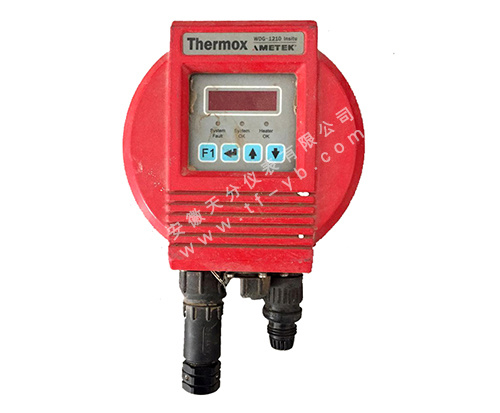
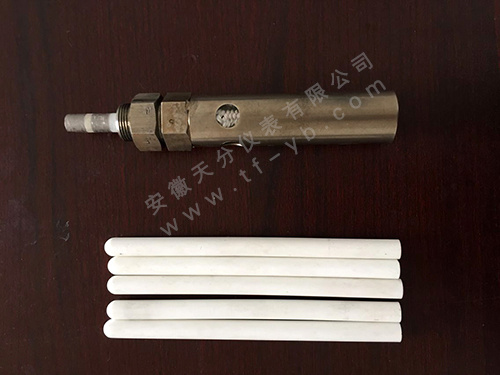
The AMETEK zirconia oxygen analyzer mainly consists of two parts: a probe and a transmitter.
1. The probe is an oxygen sensor equipped with a zirconia cell, whose main function is to output the electromotive force signal corresponding to the measured oxygen content.
2. The transmitter mainly consists of a main circuit board, an operation display panel, terminal blocks, and a chassis. The main circuit is complex and consists of an oxygen concentration difference electromotive force signal amplifier, a thermocouple electromotive force signal amplifier, a power supply unit, a signal processing unit, a temperature control unit, a display unit, and an output unit, etc.
Recommended product

Zirconia oxygen analyzer, oxygen analyzer


Copyright 2025 Anhui Tianfen Instrument Co.,Ltd Power by:300.cn