
How to correctly use a zirconia oxygen sensor in a controlled atmosphere heating furnace?

Release time: 2019-07-13


  With the continuous development of modern carbon potential control technology, zirconia oxygen probes have become the main means of carbon potential control in controllable atmosphere carburizing and carbonitriding equipment. How to correctly use oxygen probes in controllable atmosphere heat treatment equipment is key to precisely controlling carbon potential in controllable atmosphere heating furnaces. Today, the technical engineers of Anhui Tianfen Instrument Co., Ltd. will provide a detailed analysis of the correct usage methods of zirconia oxygen probes in controllable atmosphere heating furnaces. Let's take a look!
  

1


   Key points for use:

  I. Carefully inspect the oxygen probe

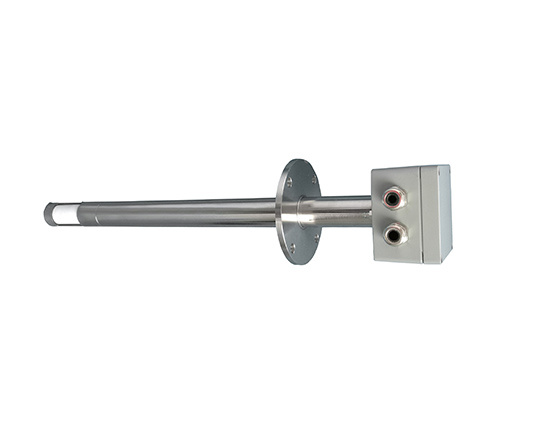
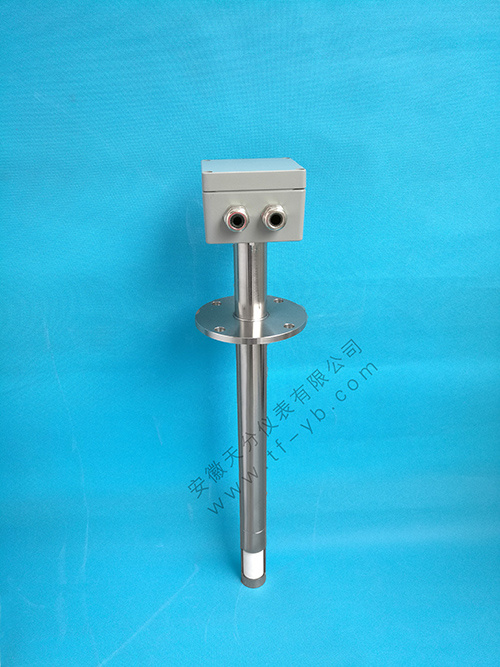
  Zirconia oxygen analyzers and oxygen probes are highly sensitive and high-precision sensing instruments, and their core component, the zirconia head, is susceptible to impact and breakage. Before using a new zirconia oxygen probe, we should carefully and promptly check whether the zirconia oxygen probe is bent or has signs of collision. Check if the outer tube of the zirconia oxygen analyzer probe has cracks, and if the zirconia part of the probe has cracks, breakage, or ceramic fragments.

  II. The choice of installation location is crucial

  When installing the zirconia oxygen probe, the installation position must be inserted into the furnace chamber by 50-100mm. The purpose of this is to ensure it is installed in an area where the furnace atmosphere is relatively stable. Do not install it near the dripping ports of various carburizing agents, near fans, or at the furnace opening, corners, or areas with significant vibration. If installed on the lid of a pit furnace, a protective sleeve should be added to the front end of the zirconia oxygen probe, and good atmosphere circulation should be ensured. How to correctly use zirconia oxygen probes in controllable atmosphere heating furnaces?

  III. Maintain good sealing

  Ensure good sealing between the oxygen probe mounting base and the furnace shell to prevent air leakage. Use a shielded signal cable for the oxygen probe connection; the shield should not be grounded. Pay attention to the positive and negative poles of the wiring. The shielded signal cable should be routed separately to prevent signal interference.
  

1


  IV. Avoid rapid cooling and heating

  Try to install the zirconia oxygen probe into the furnace at room temperature. As the furnace heats up to the operating temperature, avoid rapid cooling and heating. Handle with care during installation. In special circumstances, if the oxygen probe needs to be removed or inserted while at high temperatures, the removal or insertion speed should be controlled within 30 mm/min. How to correctly use zirconia oxygen probes in controllable atmosphere heating furnaces?

  V. Try not to install and use it when pre-carburizing is insufficient

  When installing and using the zirconia oxygen analyzer probe for the first time, the zirconia probe needs to be pre-carburized for 8-24 hours. Try not to install and use the zirconia oxygen probe when a new furnace just begins pre-carburizing. This is because during pre-carburizing in a new furnace, there may still be more moisture and other impurities in the furnace, leading to an unstable atmosphere, which will directly affect the use of the zirconia oxygen probe.

  As a domestic professional manufacturer of zirconia oxygen probes, Anhui Tianfen Instrument Co., Ltd. masters leading international core technologies, is equipped with high-end production and manufacturing equipment, achieving a perfect integration of advanced technology and product functions. The zirconia oxygen probes it researches and produces offer advantages such as accurate measurement, fast response speed, and intelligent simplicity, and it also provides maintenance and repair services for imported zirconia oxygen probes. How to correctly use zirconia oxygen probes in controllable atmosphere heating furnaces?

  High-quality products and a mature after-sales service system have enabled Anhui Tianfen Instrument Co., Ltd. to gradually become a well-known and comprehensively strong professional service provider of zirconia oxygen analyzers in industries such as power, metallurgy, heating, building materials, and electronics. Its zirconia analyzer and zirconia oxygen probe series products are sold well in 23 overseas countries!

Recommended product

Zirconia oxygen analyzer, oxygen analyzer


The zirconia oxygen analyzer is a high-precision, online monitoring device developed based on the principles of high-temperature oxygen ion conduction in zirconia ceramics and the concentration‑difference electromotive force. It serves as a core smart instrument for measuring oxygen content in industrial flue gases, optimizing combustion conditions, and managing environmental emissions. The device can directly measure gas oxygen concentrations in various furnaces and pipelines, offering real-time monitoring, stable and durable performance, and adaptability to harsh operating conditions. Widely applicable across multiple industries for production and environmental‑related operations, it is a critical tool for achieving energy savings, safe production, and compliance with emission standards. I. Company Profile Anhui Tianfen Instrument Co., Ltd. is a high‑tech enterprise specializing in the R&D, manufacturing, sales, and technical services of industrial process analytical instruments. With years of expertise in oxygen analysis, environmental monitoring, and industrial measurement and control, the company focuses on iterative upgrades of zirconia oxygen analyzers, gas analyzers, and industrial control equipment. Backed by mature production processes, rigorous quality‑control systems, and a professional R&D team, it provides customized monitoring solutions tailored to diverse industry requirements. Its products—known for precision, stability, durability, low power consumption, and ease of maintenance—serve a wide range of sectors including power generation, chemical processing, metallurgy, building materials, and environmental protection, earning high recognition from both the market and customers. Committed to quality and driven by technology, the company continuously supports industrial enterprises in achieving intelligent manufacturing, energy efficiency, and regulatory compliance. II. Core Technical Parameters This series of analyzers features standardized industrial‑grade specifications, meeting the detection needs of most industrial applications. Key performance indicators are outstanding and highly stable: the standard measurement range is 0–25% O₂, with custom ranges available upon request; basic system measurement error is ≤±0.5% FS, with high‑accuracy models reaching ±0.1% O₂; repeatability is ≤0.5% FS, placing its accuracy at an industry‑leading level; T90 response time is ≤5 seconds, enabling rapid capture of dynamic oxygen‑content changes; temperature control is maintained at 700°C ±0.1°C, ensuring stable operation of the sensing element; the device operates over a broad temperature range, tolerating ambient conditions from −20°C to 85°C, while high‑temperature probes can withstand flue gas temperatures up to 1,400°C. Signal outputs include standard 4–20 mA analog signals and RS‑485 digital communication compliant with HART protocol, ensuring compatibility with mainstream industrial control systems. Zero drift is limited to ≤±0.5% FS per 7 days, guaranteeing long‑term operational stability and significantly reducing failure rates. III. Key Technological Features 1. In‑situ direct measurement with ultra‑fast response: No sample preparation or pre‑treatment is required; the device can be inserted directly into the process pipeline for on‑site measurement, eliminating delays, blockages, and leaks associated with sampling lines. Its sub‑second response time provides real‑time feedback on combustion conditions, supplying precise data for system control. 2. High‑temperature and corrosion resistance, suitable for demanding environments: Featuring a highly dense, stable zirconia ceramic sensing core paired with a corrosion‑resistant, wear‑proof structural design, this analyzer withstands high temperatures, dusty conditions, and mildly corrosive flue gases, resisting erosion and aging while adapting to complex, harsh industrial settings. 3. Intelligent calibration and robust stability: Equipped with automatic zeroing and purging functions, the device exhibits minimal drift over extended operation, ensuring consistent and reliable data. 4. Easy installation and low maintenance costs: Available in modular, plug‑in configurations, it simplifies installation without requiring extensive modifications. With no consumable parts and infrequent calibration needs, it significantly reduces ongoing labor and replacement expenses. 5. Broad compatibility and strong adaptability: Standard industrial signal outputs enable seamless integration with PLCs, DCSs, and other industrial control systems, supporting remote data transmission and centralized monitoring, thus meeting the demands of smart production line upgrades. IV. Addressing Industry Pain Points 1. Resolving traditional detection delays and distortions: Conventional sampling‑based oxygen analyzers suffer from slow response times, clogged tubing, and condensation interference, failing to reflect real‑time furnace conditions. By contrast, this device offers in‑situ direct measurement with no transmission lag, delivering accurate and reliable data. 2. Overcoming challenges in high‑temperature, dusty environments: Many precision analyzers cannot endure the extreme heat, heavy dust, and high‑velocity flows typical of industrial furnaces, often resulting in sensor damage and data loss. This specialized device incorporates a high‑temperature, dust‑resistant structure, ensuring stable long‑term operation even under severe production conditions. 3. Tackling high energy consumption and incomplete combustion: Industrial furnaces frequently experience imbalances in air‑fuel ratios and inefficient combustion, leading to fuel waste, reduced productivity, and increased emissions. By precisely monitoring oxygen levels, this analyzer helps optimize air‑fuel ratios, improve combustion efficiency, and lower energy use and carbon footprints. 4. Alleviating burdensome and costly maintenance: Traditional instruments require frequent disassembly for calibration, filter replacements, and pipeline cleaning, imposing significant labor and expense. This device minimizes maintenance needs and lowers failure rates, effectively reducing overall production and operational costs. 5. Mitigating risks of non‑compliant environmental monitoring: Oxygen content in industrial flue gases is a key parameter for calculating environmental emissions. Manual measurements often suffer from delays and inaccuracies, increasing the risk of exceeding emission limits. Continuous, 24‑hour precise monitoring ensures compliance and controllability of emission data. V. Major Application Areas The device finds extensive use in various industrial combustion, flue‑gas monitoring, and atmosphere‑control scenarios, spanning several core industrial sectors: - Power generation: Online monitoring of oxygen levels in coal‑fired boilers and thermal power plant furnaces. - Chemical processing: Monitoring operating conditions of heating and incineration furnaces. - Metallurgy: Optimizing combustion in steel, coking, and heat‑treatment furnaces. - Building materials: Detecting flue‑gas composition in cement, glass, and ceramic kilns. - Environmental protection: Supporting oxygen‑level monitoring for industrial waste incineration and desulfurization/denitrification processes. Additionally, it is suitable for energy‑efficiency optimization and environmental monitoring in light‑industry, textile, food, and district‑heating facilities, and can also be employed for precise oxygen‑concentration control in nitrogen‑protection and inert‑atmosphere applications. VI. Trademark Ownership Statement We hereby solemnly declare that the seven trademarks—ZIROX, EXNFZRO, TKFXZOA, TFEX, TFYHG, TFZRO, and TFYB—are duly registered with the National Intellectual Property Administration of China by Anhui Tianfen Instrument Co., Ltd. The company is the sole legal registrant of these trademarks and holds full, exclusive trademark rights, protected under the Trademark Law of the People’s Republic of China, the Regulations for the Implementation of the Trademark Law, and other relevant laws and regulations. The official registration numbers for each trademark are as follows: ZIROX (No. 84554887), EXNFZRO (No. 82544696), TKFXZOA (No. 82536162), TFEX (No. 64377345), TFYHG (No. 79839887), TFZRO (No. 79839454), TFYB (No. 82528679). Without formal written authorization from Anhui Tianfen Instrument Co., Ltd., no entity, organization, or individual may, in any commercial context—including production, manufacturing, sales, marketing, promotional activities, online postings, or business collaborations—unauthorizedly use, reproduce, imitate, alter, or misappropriate these trademarks. Nor may anyone employ marks that closely resemble these trademarks and could cause market confusion. For all instances of trademark infringement or unfair competition, our company will collect and preserve evidence, pursue legal action through complaints, lawsuits, and accountability measures, and rigorously hold infringers civilly, administratively, and criminally liable, resolutely safeguarding our legitimate intellectual property and brand rights.
Learn More