

Brief introduction to zirconia analyzer
Release time: 2019-07-10
Zirconia analyzers play a crucial role in modern industrial production operations. Their primary function is to monitor the oxygen content of flue gas during combustion in real-time. They are widely used in industries such as papermaking, steel, incinerators, and small and medium-sized boilers. The application of zirconia analyzers has successfully helped many manufacturers achieve low-oxygen combustion control, resulting in ideal emission reduction and energy savings. Below, we will unveil the mystery of zirconia analyzers, detailing their origin, history, and development!
The Origin of Zirconia Analyzers
In 1989, Nernst discovered the ionic conductivity phenomenon exhibited by stable zirconia under high-temperature conditions. Since then, zirconia has gradually become a common solid electrolyte in research and development applications. Zirconia has been widely used in high-temperature technology, especially in high-temperature testing technology.
Compared to existing oxygen meters (such as magnetic oxygen analyzers, electrochemical oxygen meters, gas chromatographs, etc.), oxygen probes offer advantages such as simple structure, wide measurement range, short response time, stable operation, high operating temperature, and easy installation. These advantages contribute to their widespread use in the power, metallurgy, ceramics, chemical, and environmental protection sectors.
The History of Zirconia Analyzers
With the increasing awareness of energy conservation and environmental protection, many large and medium-sized enterprises, such as thermal power plants, steel metallurgy, and petrochemical companies, have gradually incorporated "reducing energy consumption, minimizing pollution emissions, improving combustion efficiency, and protecting the environment" as important aspects of improving product quality and enhancing the competitiveness of their products.
Steel rolling mills, heating furnaces in the steel industry, and boilers in the power industry are major energy consumers across various sectors. Therefore, measuring and improving the combustion efficiency of combustion devices and determining the optimal combustion point is a significant concern.
Zirconia Analyzers: Improving Combustion Efficiency
Combustion efficiency control has a long history. In the 1960s, CO2 analyzers were widely used to monitor the CO2 content in flue gas to control the air consumption coefficient (λ) to achieve optimization, but the CO2 content is significantly affected by the type of fuel. After the 1970s, the method of controlling combustion efficiency using the O2 content or a combination of O2 and CO content in the flue gas gradually became prevalent.
A quick and easy way to improve combustion efficiency is to use flue gas analyzers, such as zirconia oxygen analyzers and comprehensive flue gas analyzers, to monitor and grasp the gas composition in the flue in real-time. This allows for precise control and analysis of the oxygen content in the flue gas, adjusting the flow rate of combustion air and fuel to determine the optimal air consumption coefficient.
Instruments that measure the oxygen content in flue gas are called oxygen analyzers (oxygen meters). Commonly used oxygen analyzers mainly include thermal magnetic and zirconia types. In particular, zirconia oxygen analyzers offer a high cost-performance ratio, making them favored by many users.
The Development of Zirconia Analyzers
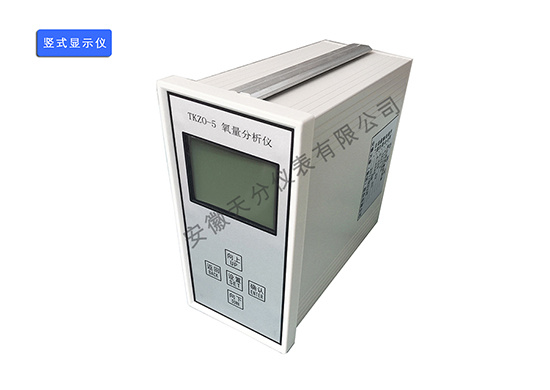
With continuous updates and advancements in science and technology, more and more companies in various fields have upgraded their zirconia oxygen analyzer products. Anhui Tianyi Instrument Co., Ltd. continues to advance and innovate in the research and development of zirconia oxygen analyzers. Their manufactured zirconia analyzer series products are quality-assured, employing ion plating technology for the sensors, resulting in strong oxidation resistance, extended service life, extremely low long-term oxygen potential drift, and stable and reliable measurement data. The liquid crystal Chinese menu display and human-machine interaction make operation and debugging convenient and simple, meeting the customized needs of various industries, research institutions, and national laboratories.
Recommended product


Copyright 2025 Anhui Tianfen Instrument Co.,Ltd Power by:300.cn